

FLYING IN ITSELF IS NOT INHERENTLY DANGEROUS, JUST INHOSPITABLE TO CARELESSNESS OR MISTAKES
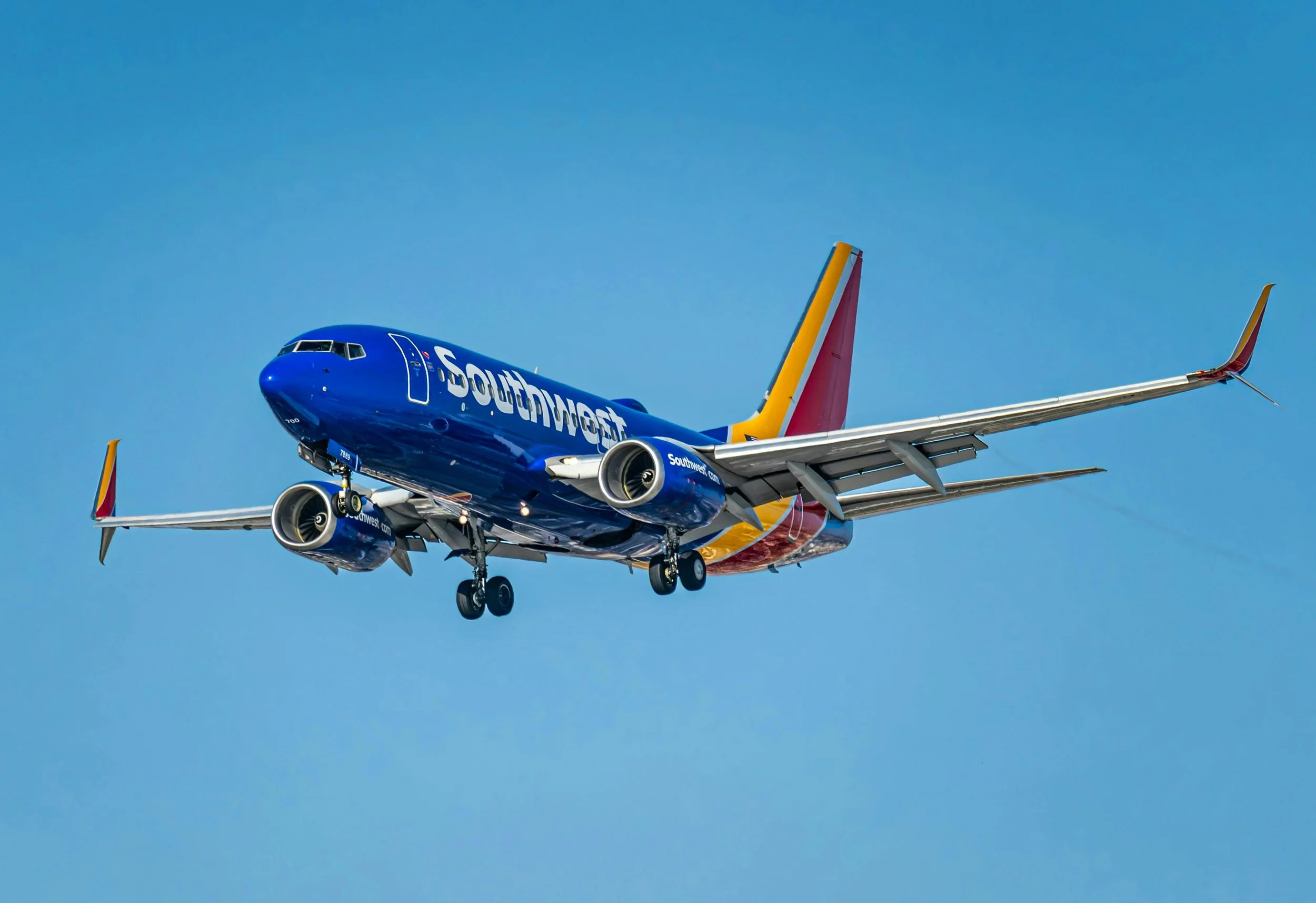
Photo by Soly Moses
Southwest Airlines, the LUV airline, will celebrate its 60th anniversary next March. It’s a pretty remarkable story. Even before getting a plane off of the ground, the upstart airline spent three years in litigation, brought by Braniff Airlines. At that time, flights, routes, and fares were all governed by regulations...except if your flights were all in-state, which Southwest's were, those rules didn’t apply. The impact was a lower operational cost structure for in-state operations.
Braniff’s 3-year litigation was an open attempt to suppress competition; however, Southwest ultimately prevailed, and it just took the Supreme Court. Meanwhile, Braniff’s business practices bankrupted them within the decade.
Free of litigation but broke, Herb Kelleher, Rollin King, and Lamar Muse still managed to acquire three planes from Boeing and the rest, as they say, “is history.” How have they been so successful?
Herb Kelleher was adamant from the start that the people who worked for Southwest were its most valuable asset. How many times have you heard that from an organization, and how many times have you rolled your eyes when you did? Well, in this case, someone meant it. It was a simple principle.
Your employees come first. And if you treat your employees right, guess what? Your customers come back, and that makes your shareholders happy. Start with employees and the rest follows.
—Herb Kelleher
This is a classic demonstration of the Economics of Decency.
How did they get those kinds of people? They had three fundamental qualities they sought in every hire:
A servant’s heart
A warrior spirit
A fun-loving attitude
Everything else they trained for.
How many mediocre, or worse, businesses have you walked into where self-interest drove the business? You were just a target.
I remember from my sales days, when cold calls meant personally “knocking on doors.” As I was talking to the receptionist about the organization and who I should see, I was already starting to get a sense for what kind of work environment it was.
We have shopped at Whole Foods a lot over the years, and I can not remember ever encountering an employee who was not cheerful, helpful, and seemed to like working there.
John Mackey was so successful with the culture he built that he started a movement, Conscious Capitalism. John is a Capitalist to his core, just a different type.
Value your people, empower them, and the rest will follow. Just like Herb.
He captured his story and his movement in Conscious Capitalism, written with the co-founder of the movement, Raj Sisodia, a pretty good read.
Conscious Capitalism is founded on four principles:
Conscious leadership
Stakeholder orientation
Conscious culture
Higher purpose
“Well, Craig, what are the economic benefits of decency?” Glad you asked!
At an annual conference, which included a couple of hundred companies that have taken this commonsense approach to business, Sisodia reported that he had researched 28 companies that he thought did the best job of this. Of them, 18 were public companies with available data.
They averaged a factor of 10.5X what the S&P did for over a decade.
And what about Southwest? They have consistently had the lowest turnover of any airline. They have never had a layoff. They have made a profit every year for the 59 years they have been in business, except 2020 during COVID… nonetheless, no lay-offs, all departures were volunteers, while the other airlines laid off 92,000 employees. Southwest was back into profit the following year, while the other airlines were still well underwater; some are still struggling or out of business.
Now, in fairness, I should add that Kelleher and Mackey had an advantage; their organizations were founded on and driven by purpose. A purpose they lived in everything they did.
Whole Foods: “to nurture people and the planet.”
Southwest Airlines: “to give people the freedom to fly.”
There is a lot of evidence that the economics of decency are superior to the economics of “business as usual.” Let’s just take a simpler approach. Look at your own experience. When you deal with a store, a supplier, an organization, or even a neighbor, are you more responsive when you feel like they genuinely want to help, appreciate you, and you are important to them? Are you more likely to go back as well as tell your friends? By contrast, when you don’t get that, what is your experience?
I find a consciously driven business with a customer-focused purpose is far less common, while ”business as usual” is so common that it is what we have come to expect. Here’s the really cool thing: if you are competing against business as usual, it’s not hard to rise above the pack.
It’s not just a simpler way to live life or to do business more successfully; it feels better. I know it does for us.
Have a great week, thanks for reading, and we always appreciate your comments.
Cheers,
Southwest’s One Heart community program is sponsoring a program to create “A million acts of kindness.”
Feel free to participate.
Ready to explore how authentic appreciation fuels breakthrough leadership, strengthens organizational culture, and drives business transformation? Share your appreciation story with us.
Fundamental of the Week #25: PAY ATTENTION TO THE DETAILS
Be rigorous about accuracy and precision. Double-check your work.
Momentum Consulting offers executive business coaching, top-level executive consulting, team training, and team off-sites to build and transform your business to the next level. Inquire about business consulting and leadership coaching today.
